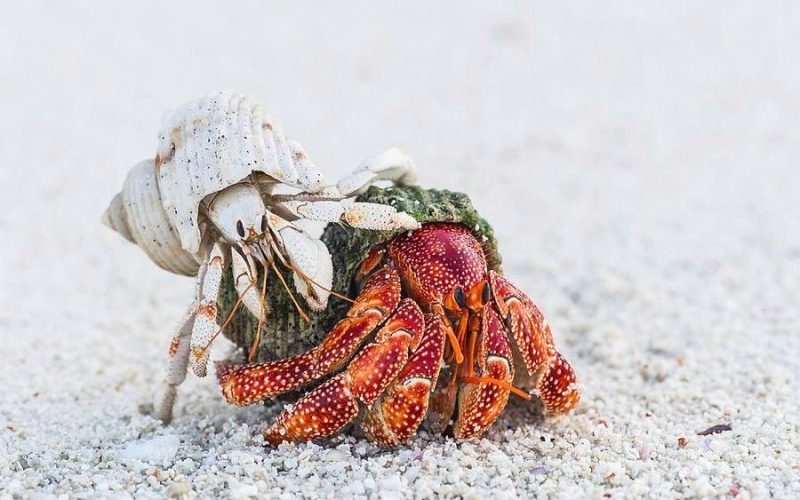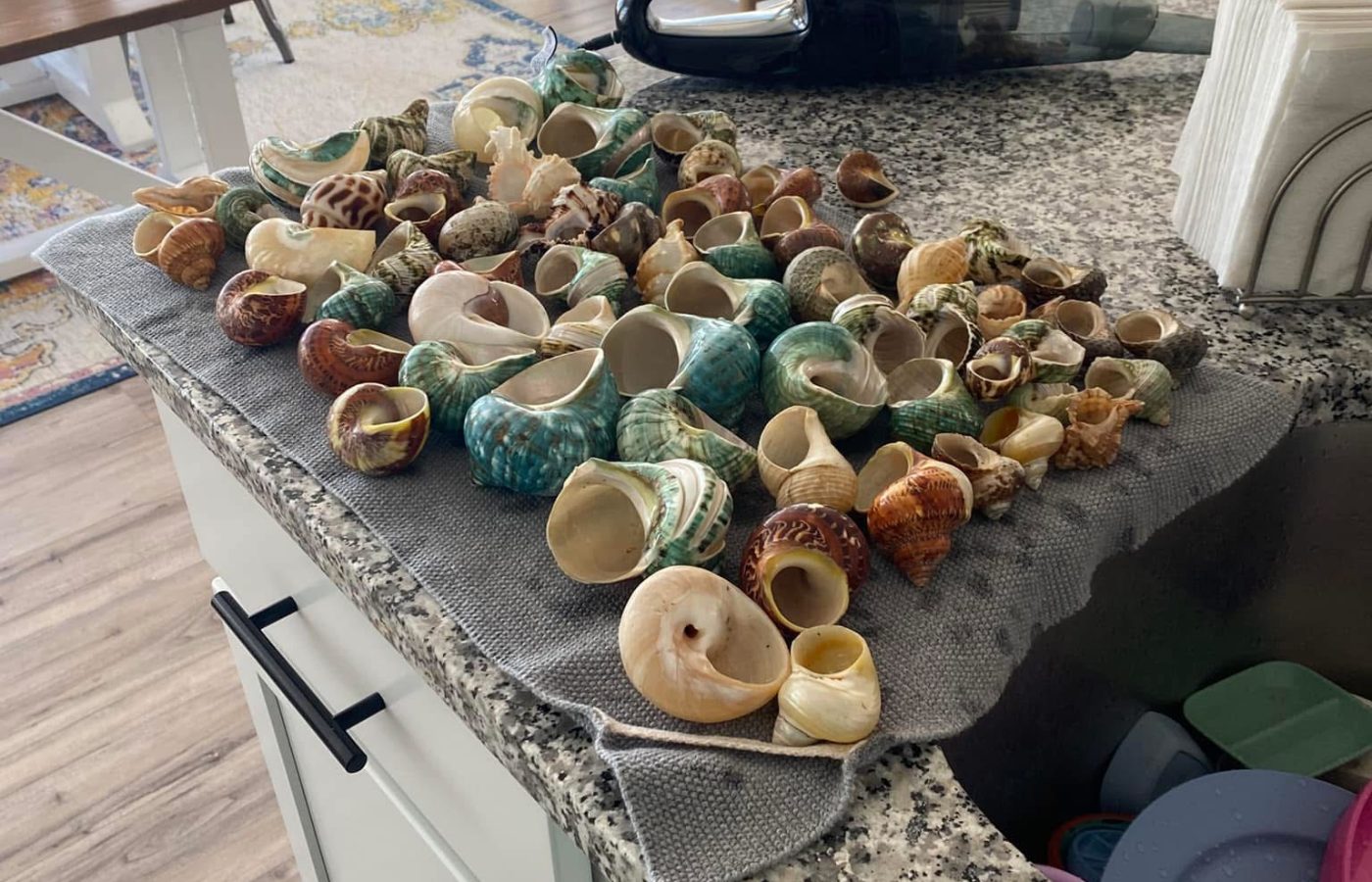
Crabs choose shells by fit, shape, and weight, and preferences vary. Offer several natural, unpainted choices and let each crab pick for itself. Never force a crab out of or into a shell.
What kind of shells do they need?
Natural, unpainted turbo-style shells. Keep at least 3 to 5 spare shells per crab — include shells in the crab’s current size as well as modestly larger options, and let the crabs choose. A commonly used fit reference is a shell opening roughly the size of the crab’s large pincer, but that rule isn’t universal — crabs regularly pick shells that look too big or too small to you, so verify opening measurements, shape, weight, and your species’ preferences when buying (Etsy-style sellers that list exact opening measurements help). For Purple Pinchers, tapestry turbos and striped/Mexican/grey turbos are preferred types. Keep painted, glazed, dyed, or coated shells out of the tank — keepers avoid them because of toxic-paint concerns, though that avoidance advice is keeper caution, not a demonstrated chemical analysis. Shell shortage is serious: a crab short on options may force a tankmate out of its shell and steal it.
Sources: HCA Basic Care Sheet (https://hermitcrabassociation.com/phpBB/viewtopic.php?f=51&t=92457); HCA Purple Pincher species sheet (https://hermitcrabassociation.com/phpBB/viewtopic.php?t=92452)
Where can I buy good shells, and how do I prepare them?
Natural shells are sold online and in craft stores; several keepers buy from Etsy sellers that list exact opening measurements. Choose by species suitability and measured opening size rather than a marketplace name alone. Before offering new shells, clean and prepare them using a verified method: boiling heat-safe empty shells in dechlorinated water for about five minutes is one such method — boiling is preparation, not proof of complete sterilization. Soak and carefully check each shell first to make sure no crab is hiding inside, and never boil an occupied shell; soaking alone doesn’t prove a shell is empty, so inspect it. Emergency rinsing (a quick rinse with conditioned freshwater when you need shells immediately) is separate from routine preparation.
Sources: HCA Basic Care Sheet (https://hermitcrabassociation.com/phpBB/viewtopic.php?f=51&t=92457); CSJ tank-cleaning guide (https://crabstreetjournal.org/blog/how-do-i-clean-my-hermit-crab-tank-crabitat/) — accessed 2026-10-04
Editorial source review: October 4, 2026. This is an editorial draft of keeper guidance, not veterinary approval. Guidance generally focuses on Purple Pinchers (Coenobita clypeatus).