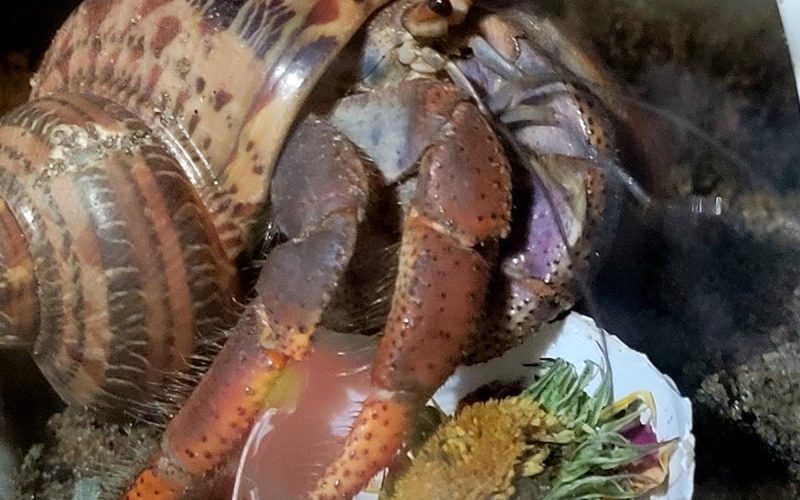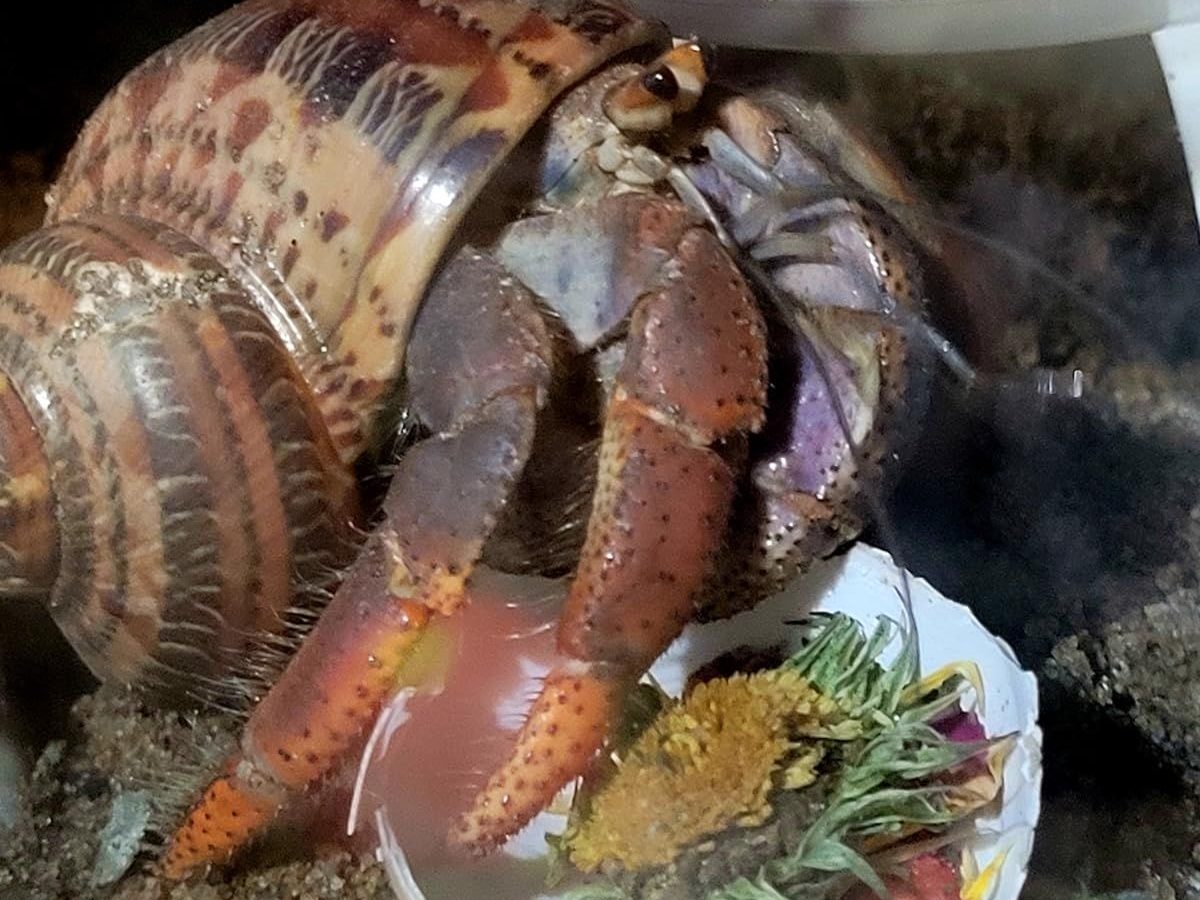
For everyday land hermit crab feeding, choose suitable ingredients first. Then prepare a texture the crabs can handle and a serving you can keep fresh.
Choose the food before choosing the texture
A finely ground food is not automatically a balanced meal. Offer different food categories and rotate ingredients, including appropriate animal protein and safe plant foods. Keep natural calcium sources available consistently. LHCOS recommends variety rather than depending on one product.
Check unfamiliar ingredients against the Crab Street Journal food guide before serving them. A bag labeled for hermit crabs still needs an ingredient review. Cutting or grinding does not make an unsuitable ingredient suitable.
Use a mix of textures
Small crabs may find finely chopped or crushed food easier to access. You can also offer small pieces alongside finer material. There is no need to turn every ingredient into one uniform powder.
Use clean tools without seasoning or cleaning-product residue. Keep food plain.
Serve less, check more
Offer small portions of fresh or wet food. Inspect and remove leftovers before they mold or sour in the warm habitat. Check dry food too.
Keep food on a suitable serving dish rather than letting it contaminate the water or substrate. Remove spoiled items promptly.
Make the next serving easy
Freeze suitable foods in small, labeled portions. Store dry ingredients in sealed containers in a cool, dry place; check them for moisture, clumping, odor, or mold.
A useful kitchen note: write down the ingredients served, their texture, and what you removed at the next check. That gives you a simple record for planning rotation and reducing waste.
For the wider diet, read our feeding and calcium guide. This care note covers everyday preparation, not feeding an injured or actively molting crab.
Sources and further reading
- The Crab Street Journal: How to Prepare Food for Hermit Crabs
- LHCOS: Hermit Crab Food and Nutrition Standards
- The Crab Street Journal: What Do Hermit Crabs Eat?
Sources checked: 2026-10-19.